




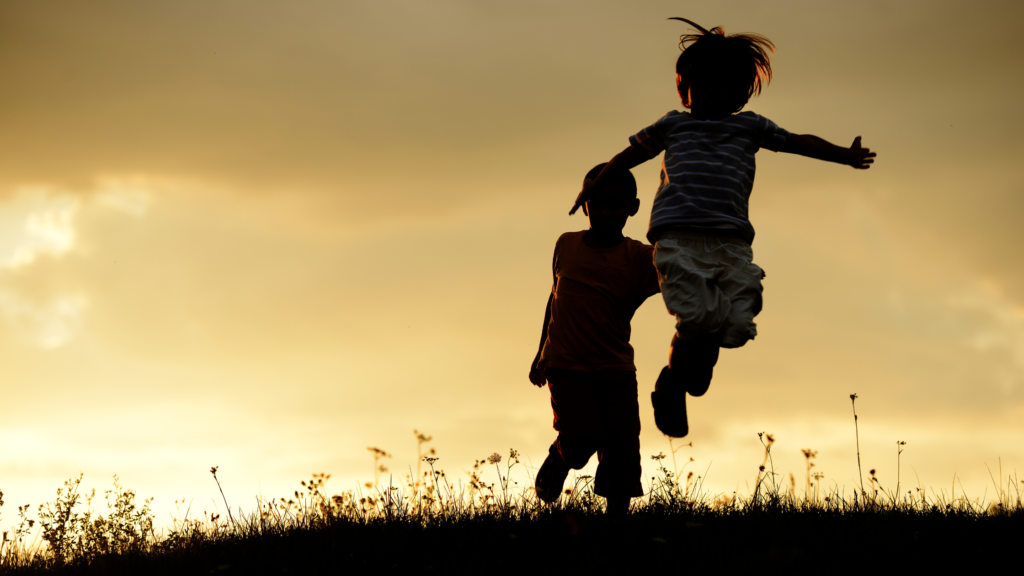
How to introduce the four elements of nature so that students discover new ways of moving, expressing themselves and becoming aware of their bodies
In many classrooms, movement is still seen as a break between more “academic” activities. However, when approached from a conscious pedagogical perspective, movement can become a powerful tool for learning, exploration, and expression .
The lesson we’re highlighting this week on Aplicaset proposes precisely that: discovering movement through the four elements of nature . It’s a proposal that connects the body, imagination, and sensory experience, and can be easily implemented in the classroom.
Before delving into this exploration, it’s important to note that this module is directly related to modules 5, 6, and 7 , which present different movement qualities that serve as a foundation for a better understanding of this approach. If you haven’t already reviewed them, we recommend starting with those modules.
The body as a learning tool
When we propose movement activities in the classroom, we’re not just looking for physical activity. What we’re activating is:
- body awareness
- creativity
- emotional expression
- perception of space
- coordination
- imagination
Working with elements of nature makes it accessible, because children already have a prior idea of what they represent.
We all intuitively know how fire moves or how water flows. That mental image is the starting point for investigating new ways of moving.
There is no single right way. The richness lies precisely in exploring and discovering .
The four elements as inspiration for the movement
The proposal consists of inviting students to experience what it would be like to move if their body represented each element.
To enrich the experience, it may be helpful to introduce questions such as:
- What animal do you think moves like this object?
- What kind of drawing or painting could represent it?
- Which part of the body do you think initiates that movement?
These partnerships help the movement to emerge naturally.
🔥 The fire
If fire were a drawing, it would have cuts, explosions, and unexpected changes .
If I were an animal, I could be an eagle or a rooster .
Fire is related to impulsiveness, youth, passion, and unpredictability.
How does it move?
Energy originates in the chest or back , and from there it propels the rest of the body.
The movement is:
- rude
- arrhythmic
- with changes of direction
- with unexpected stops
- not continuous
You can draw straight lines and cut movements .
If we relate it to dance, we could think of breakdancing .
💧 Water
If water were a drawing, it would be wavy and fluid .
If I were an animal, I could be a feline .
Water is associated with sensuality, maturity, and continuity.
How does it move?
Energy originates in the pelvis , the body’s energy center.
From there the movement spreads to the rest of the body.
It’s a movement:
- continuous
- wavy
- rhythmic
- gentle
We could relate it to oriental dance or belly dance .
🌍 The Earth
If the earth were a drawing, it could be pointillist .
If it were an animal, we could think of an elephant or a bear .
The earth is associated with security, serenity, roots, and stability.
How does it move?
Energy arises from the waist down , connecting with the ground.
It’s a movement:
- rhythmic
- heavy
- continuous
- with pauses and silences
Those pauses are also part of the rhythm.
We can relate it to African dances or some urban dances .
🌬️ The air
If air were a drawing, it would be a spiral or a light displacement movement .
If it were an animal, it could be a butterfly, a snake, or a jellyfish .
Air is related to the ethereal, the light, the spiritual, and the imaginative.
How does it move?
The energy originates in the upper part of the body , especially in the arms.
It’s a movement:
- light
- continuous
- volatile
- focused on the upper limbs
It doesn’t weigh much.
We can associate it with ballet or classical dance .
An invitation to explore, not to imitate
The aim of this proposal is not for the children to reproduce a specific movement, but to investigate what it feels like to move using different energies .
Each body will respond differently.
And that’s where learning comes in: through exploration.
How to bring this proposal into the classroom
Some ideas for introducing this activity:
- Start with music that suggests each element
- Use fabrics or materials that evoke the elements
- observe how the movement changes according to the space
- invite them to explain what they felt when moving like that
These small variations can generate very rich experiences of movement and expression.
A platform designed for real-world practice
This proposal is part of the training modules of Aplicaset , a platform where more than 50 voices from the educational field share real practices that work in the classroom.
These are short, direct videos designed so you can bring ideas to your classroom tomorrow .
You will find suggestions on:
- movement and body expression
- neuroeducation
- teacher welfare
- active methodologies
- classroom organization
- emotional support
and many other educational topics.
Discover the full pill
In this week’s lesson you will discover in more detail how to work with the four elements of movement and how to introduce them step by step with your group.
👉 Access the full pill on Aplicaset
And if you’re not yet part of the platform, you can register to explore all the available capsules. Because sometimes a 15-minute idea can transform the way we look at our work in the classroom .
Leave a Reply