




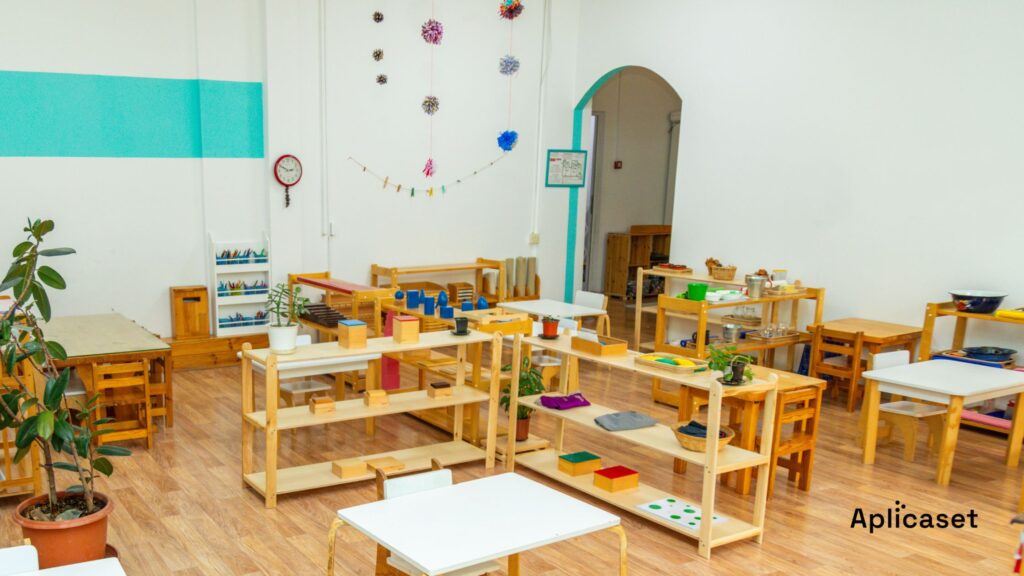
Key elements shared between Montessori, Waldorf, PBL and other methodologies to integrate them without getting lost in labels
If you’ve been involved in education for a while, you’ve probably heard of concepts like Montessori, Waldorf, Project-Based Learning, learning environments, experiential learning, and active methodologies. It’s also likely that, between courses, readings, and social media, you’ve felt a mix of interest and overwhelm at some point. Where do I begin? Do I have to choose just one methodology? Is it compatible with my school, my curriculum, or my daily reality?
The good news is that you don’t need to commit to a specific methodology to work from an active learning perspective . In fact, many of these approaches share a much broader common ground than it might seem. Understanding this common ground is the first step toward integrating real, sustainable, and coherent changes in the classroom.
What do we mean by active pedagogies?
Active learning pedagogies are neither a rigid method nor an educational fad. They represent a way of understanding learning in which students cease to be passive recipients of content and become active participants in their own learning process. They are based on experience, action, reflection, and connection.
Montessori, Waldorf, PBL, cooperative learning or learning environments come from different historical and philosophical contexts, but converge on the same pedagogical vision : a more humane, respectful education connected to the reality of the learner.
The values shared by active pedagogies
Beyond specific materials or concrete structures, these educational approaches have a number of principles in common that can be applied in any classroom, regardless of the method you officially follow.
1. The boy and girl at the center of learning
Active learning pedagogies are based on respecting the pace, interests, and needs of the students. The curriculum doesn’t disappear, but it ceases to be the sole focus, giving way to curiosity, motivation, and meaning.
2. Learning by doing (and reflecting)
Meaningful learning is built upon experience. Manipulating, investigating, creating, making mistakes, and trying again are key actions. It’s not just about “doing things,” but about giving them a clear educational purpose .
3. Autonomy and progressive responsibility
From Montessori to Project-Based Learning, autonomy is not a final goal, but a process. Active learning pedagogies rely on students’ ability to make decisions, organize themselves, and take responsibility, always with adult guidance.
4. Emotional support and bonding
There is no learning without connection. These methodologies recognize the emotional dimension as an essential part of the educational process. The classroom climate, emotional security, and the relationship with the adult are as important as the content.
5. The teacher’s role as a guide
The teacher ceases to be merely a transmitter of information and becomes a facilitator, observer, and designer of learning experiences. Pedagogical authority does not disappear, but it is transformed.
Is it necessary to choose only one methodology?
No. And, in many cases, doing so can generate more frustration than benefits.
Most schools and teachers work in hybrid contexts, with real limitations of time, resources, and structure. Active learning pedagogies are not meant to be applied dogmatically , but rather to inspire more conscious pedagogical decisions.
You can incorporate elements of project-based learning, introduce moments of autonomy in the Montessori style, take care of rhythms and symbolic play as Waldorf proposes, and do so without giving up your programming or the requirements of your center.
The key is not in the label, but in the pedagogical intention.
How to get started without changing your entire approach
Integrating active learning pedagogies doesn’t mean redoing everything. In fact, the most effective changes are usually small, sustained, and well thought out.
Some ideas to get started:
- Review how you organize classroom time and space.
- Introduce moments of choice within existing activities.
- Prioritize processes over closed results.
- Observe more and explain less.
- Design activities that connect with the students’ real lives.
Small adjustments can generate big transformations when they are aligned with a clear pedagogical vision.
Active pedagogies in real practice
At Aplicaset, we believe that innovation only makes sense when it fits into the daily work of teachers . That’s why our training modules don’t explain theories from the outside, but rather real-world practices shared by professionals who educate from within: in classrooms, schools, educational projects, and families.
We are not looking for ideal models, but for honest, tested and applicable proposals.
Start today, without changing your schedule.
If you want to take the first steps in a simple and realistic way, we have prepared a practical resource for you.
Download our free lead magnet: “5 ways to get started with active pedagogies without changing your curriculum”
Simply register at www.aplicaset.com and you will have access to the full resource, as well as our first training modules.
Leave a Reply